
Rwanda to switch off 3G networks on 30 June 2027

The Government of Rwanda has approved a phased plan to retire the country’s 2G and 3G mobile networks and complete the transition to 4G and 5G.
Under the plan, 3G services will be switched off nationwide on 30 June 2027. The 2G network will be retired at a later stage.
The Government is currently working towards December 2028 for the 2G switch-off. The final date will depend on the outcome of the 3G transition and an assessment of network coverage, service continuity, the number of people still using older phones, the migration of systems that depend on 2G, and the country’s overall readiness.
Why Rwanda is making the change
Operating four generations of mobile technology at the same time is costly and inefficient. It takes up valuable radio spectrum, increases network maintenance costs and limits investment in newer technologies.
Retiring 2G and 3G will make more spectrum available for 4G and 5G, which offer faster connections, greater capacity and stronger security.
Many countries are making the same transition, and several have already shut down their older networks.
A study conducted for Rwanda found that, without a planned transition, more than two million people could still be using 2G in 2030. Many of them may struggle to afford a 4G-enabled phone. The plan therefore includes measures to keep devices affordable and ensure that no one is left behind.
What must be ready before the switch-off
The Government will only proceed with the 3G switch-off once the necessary conditions have been met.
The Ministry of ICT and Innovation, the Rwanda Utilities Regulatory Authority and mobile operators will monitor:
- 4G coverage and call quality across the country, including in rural areas
- the availability and reliability of Voice over LTE, or VoLTE, including for emergency calls
- the continuity of calls, SMS, mobile money, payments and other essential services
- the migration of services that still depend on USSD, 2G or 3G
- the replacement of connected equipment such as meters, trackers and security systems
- the availability of affordable 4G phones
- customer support and public communication
How the switch-off will take place
The transition will be carried out gradually.
During 2026, operators will expand 4G coverage, confirm that VoLTE is working reliably, identify services and devices that still depend on older networks, and begin moving them to newer technology.
Operators will also conduct trial shutdowns in selected areas. Any problems identified during these trials will be addressed before the nationwide switch-off.
During the first half of 2027, operators and service providers will complete the migration of critical systems, notify customers, strengthen their support services and establish a joint team to respond to issues during the transition. Reporting and monitoring will become more frequent as the switch-off date approaches.
A limited number of critical services may be granted additional time where there is a genuine need. Any extension will be temporary, supported by a clear migration plan and approved by the regulator. There will be no open-ended exemptions.
What phone users should do
Anyone using a 3G phone should prepare well before the switch-off date.
Phone users are advised to:
- check whether their phone and SIM card support 4G
- follow their operator’s guidance on replacing or upgrading a phone or SIM card
- avoid buying phones that only support 2G or 3G
- ask their operator how frequently used services, including USSD services, will work after the transition
- follow official updates from MINICT, RURA and mobile operators
How to check whether your SIM supports 4G
Customers can check their SIM card from their handset.
MTN customers can dial *456*1#.
Airtel customers can dial *255*5*4#.
Anyone who is unsure should contact their mobile operator. Operators will also contact customers who need to replace their phone, SIM card or both.
What businesses and institutions should do
Businesses, government institutions and other organisations should identify any equipment or services that rely on 2G or 3G.
These may include USSD services, card and payment terminals, utility meters, security systems, vehicle trackers and other connected devices.
Each organisation should assign someone to manage the transition, set aside the necessary budget, test replacement systems and confirm that services will continue to operate before 30 June 2027.
Particular attention will be given to mobile money, payments, utilities, transport, healthcare, public safety and government services.
More information
MINICT and RURA are coordinating the transition through a working group that includes mobile operators, government institutions, the financial sector and other affected organisations.
The Government will provide regular updates as the work progresses. It will also review the outcome of the 3G switch-off before confirming the final timetable for retiring 2G.
For more information, contact the Ministry of ICT and Innovation at info@minict.gov.rw, visit the MINICT and RURA websites, or follow updates through your mobile operator’s official channels.
More News
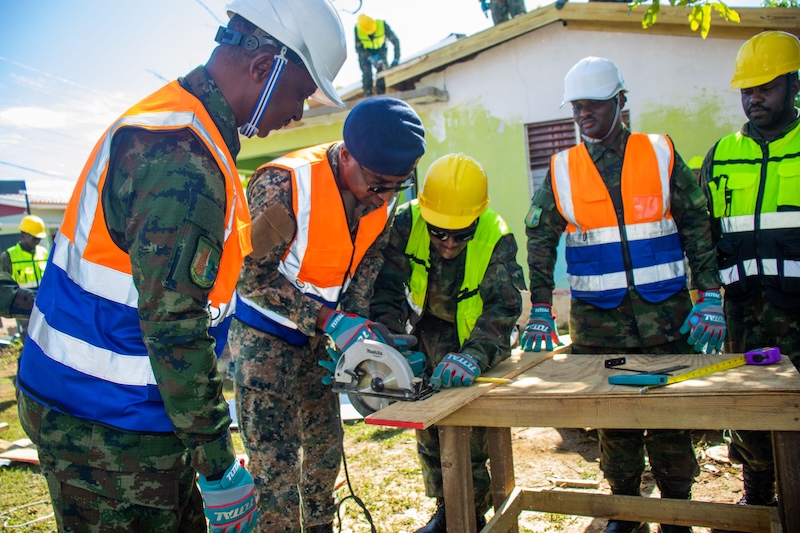
THE JDF SUPPORT BRIGADE COMMANDER VISITS RDF ENGINEER CONTINGENT IN JAMAICA
Montego Bay, 31 January 2026
The Commander of the Jamaica Defence Force (JDF) Support Brigade, Brigadier O' neil A Bogle, visited the Rwanda…

RDF INTER-FORCE COMPETITION WRAPS UP WITH EXCITING FINAL
Kigali, 31 January 2026
The 2025–2026 RDF Inter-Force Sports Competition concluded today with an exciting final football showdown at Kigali Pélé…

CHIEF OF CIVIL MILITARY COOPERATION ADDRESSES RUBAVU RESIDENTS DURING UBUTWARI TOUR 2026 CONCERT
Rubavu, 30 January 2026
The Chief of Civil Military Cooperation (Chief J9), Col Désiré Migambi Mungamba, today addressed residents of Rubavu…

MINISTRY OF DEFENCE HOSTS PARLIAMENTARIANS FROM NAMIBIA
Kigali, 28 January 2026
Today, the Minister of Defence, Hon Juvenal Marizamunda, received a delegation of Members of the Parliamentary Standing…

RDF PRESS RELEASE - APPOINTMENTS IN THE RWANDA DEFENCE FORCE
REF: RDF/DPA/A/15/08/26
Kigali, 24 January 2026
1. H.E THE PRESIDENT OF THE REPUBLIC OF RWANDA AND C-IN-C OF RDF HAS APPOINTED Brig Gen Godfrey…

RDF COMMAND AND STAFF COLLEGE HOLDS ANNUAL CULTURAL DAY
Musanze, 23 January 2026
The Rwanda Defence Force Command and Staff College (RDFCSC) today held its 13th Annual Cultural Day at its premises in…

RDF AND JAMAICAN MILITARY ENGINEERS COMMENCE JOINT RECONSTRUCTION WORKS IN MONTEGO BAY
Jamaica, 19 January 2026
The Rwanda Defence Force (RDF) Engineer Contingent in collaboration with engineers from the Jamaica Defence Force (JDF),…

A team of six RDF and RNP officers is at United Nations Headquarters in New York City to participate in the 2026 Contingent-Owned Equipment Working Group (COEWG).
New York,19 January 2026
A team of six RDF and RNP officers is at United Nations Headquarters in New York City to participate in the 2026…

JAMAICA FOREIGN MINISTER WELCOMES RWANDA DEFENCE FORCE ENGINEER CONTINGENT
Kingston, 15 January 2026
The Government of Jamaica has officially welcomed the Rwanda Defence Force (RDF) Engineer Contingent deployed to support in…

RDF INTER-FORCE SPORTS COMPETITION REACHES SEMI-FINALS
Kigali, 15 January 2026
The Rwanda Defence Force (RDF) Inter-Force Sports Competition (IFC) Edition 2025–2026 has progressed to the Semi-Finals…