
Rwanda Advances Climate and Disaster Risk Analytics Through GRMA Technical Workshop

Participants and partners pose for a group photo during the GRMA Technical Workshop in Kigali.
The Ministry in Charge of Emergency Management (MINEMA), in partnership with the Global Risk Modelling Alliance (GRMA) and the Global Shield Solutions Platform (GSSP), convened a technical workshop to strengthen Rwanda’s capacity to use climate and disaster risk data and analytics for risk-informed decision-making and disaster risk financing.
The two-day workshop, held on 26–27 August 2026, brought together representatives from government institutions, the private sector, civil society and international partners working in climate and disaster risk management. The workshop forms part of Rwanda’s ongoing collaboration with the Global Shield against Climate Risks and the GRMA.
Opening the workshop, MINEMA Permanent Secretary Ngoga Aristarque welcomed participants and appreciated the continued partnership and support from the Global Shield, GSSP and GRMA in strengthening Rwanda’s disaster risk management and resilience.
He recalled that Rwanda’s engagement with the Global Shield began with a country-led process, including a stock-take and gap analysis, which informed the country’s Request for Support submitted to the Global Shield in March 2026. The request was also informed by Rwanda’s disaster risk financing diagnostic, which identified an estimated annual financing gap of approximately US$55 million, alongside significant reliance on ex-post budget reallocations to finance disaster response.
“This clearly demonstrates the importance of strengthening systems for pre-arranged, predictable and sustainable financing for climate and disaster risks,” PS Ngoga said.
He noted that strengthening risk analytics, data and modelling is critical to ensuring that decisions on disaster risk management and financial protection are based on reliable evidence.
The GRMA technical workshop provides a platform for institutions to jointly assess existing climate and disaster risk analytics, models and datasets, identify critical gaps and agree on priority areas for further support. According to the workshop concept note, Rwanda has identified gaps in risk modelling, hazard and exposure data, loss and damage information, interoperability of risk information systems and institutional capacity to use risk analytics for disaster risk financing and broader resilience planning.
The workshop is also expected to help define priority projects under the GRMA country support programme and develop their respective Terms of Reference. Key areas under consideration include improving the quality and resolution of climate data, developing or strengthening flood and flood-induced landslide models, enhancing institutional capacity, developing infrastructure exposure data and addressing interoperability gaps among risk information systems and datasets.
The Global Risk Modelling Alliance supports countries with open data, technology, technical assistance and practical learning to strengthen climate and disaster risk insight, support strategic decision-making and help unlock risk finance for public good. It also serves as a key resource for the Global Shield Initiative in climate risk assessment and capability development.

The GRMA has approved EUR 900,000 in additional support to strengthen Rwanda’s climate and disaster risk analytics. The workshop is intended to identify and prioritise critical data and analytics gaps that will inform and shape the GRMA support programme.
Over the two days, participants engaged in discussions and group work to develop a shared understanding of Rwanda’s existing risk analytics capabilities and identify priority projects based on national needs. The process is expected to result in agreed project scopes, work packages, intended outputs, an implementation roadmap and clearly defined roles and responsibilities for key stakeholders.
The workshop represents another step in Rwanda’s efforts to strengthen evidence-based disaster risk management and develop more effective mechanisms for anticipating, preparing for and financing climate and disaster risks. Through stronger data, modelling and institutional capacity, Rwanda aims to improve risk-informed decision-making and support the development of sustainable financial protection solutions.
More News

Government hosts UN Field Careers Briefing
Kigali, 8 May 2019
The Government of Rwanda through the Ministry of Public Service and Labour and Rwanda Defence Force (RDF) in partnership with the…

EAC Military medical specialists to join RDF in 2019 CIMIC activities
Kigali, 7 May 2019
Military Experts from the East African Community block are now in Rwanda for a two days meeting aimed at assessing and planning…
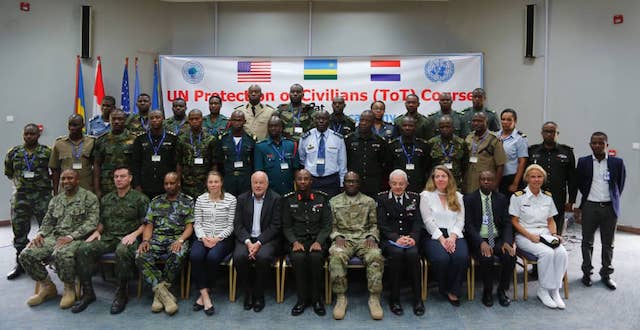
Rwanda Peace Academy hosts UN Protection of Civilians Training of Trainers Course
Musanze, 6 May 2019
Twenty-six military and police officers from 13 countries have today started the UN protection of civilians training of trainers…
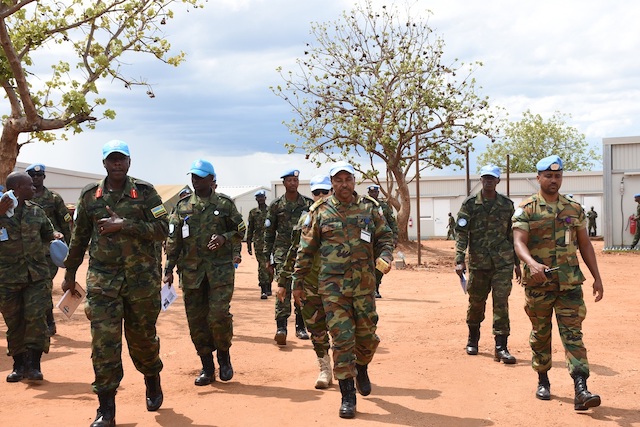
Sector Juba commander lauds Rwandan peacekeepers under his command
Juba, 2 May 2019
Rwandan peacekeepers of Rwanbatt3 Region Protection Force (RDF 67 Infantry Mechanized Battalion) stationed in South Sudan’s capital…

RDF moves COP 2019 to Rutsiro
25 April 2019
Rwanda Defence Force through Rwanda Military Hospital will tomorrow conclude a two-week Citizen Outreach Programme 2019 where the force…

RDF launches a Brigade-based clinic in Karongi
Karongi, 23 April 2019
Rwanda Defence Force (RDF) has acquired its ninth Brigade-based clinic in Karongi district to serve troops attached to the 511…

RDF Citizen Outreach Programme 2019 kicks off
17 April 2019
RDF has today launched the Citizen Outreach Programme 2019 (COP 2019) in which the Force carries out various activities geared towards…


Newly appointed RDF service chiefs assume office
Kigali, 10 April 2019
The newly appointed Rwanda Defence Force (RDF) service chiefs have officially assumed office today. It was during a handover…

RDF PRESS RELEASE - APPOINTMENTS AND CHANGES WITHIN RDF
REF: RDF/MPR/A/07/02/19
Kigali, 09 April 2019
1. H.E. THE PRESIDENT AND COMMANDER-IN-CHIEF OF RWANDA DEFENCE FORCE (RDF) HAS MADE THE FOLLOWING…