
Review of Rwanda’s Fifth Periodic Report under the International Covenant on Civil and Political Rights
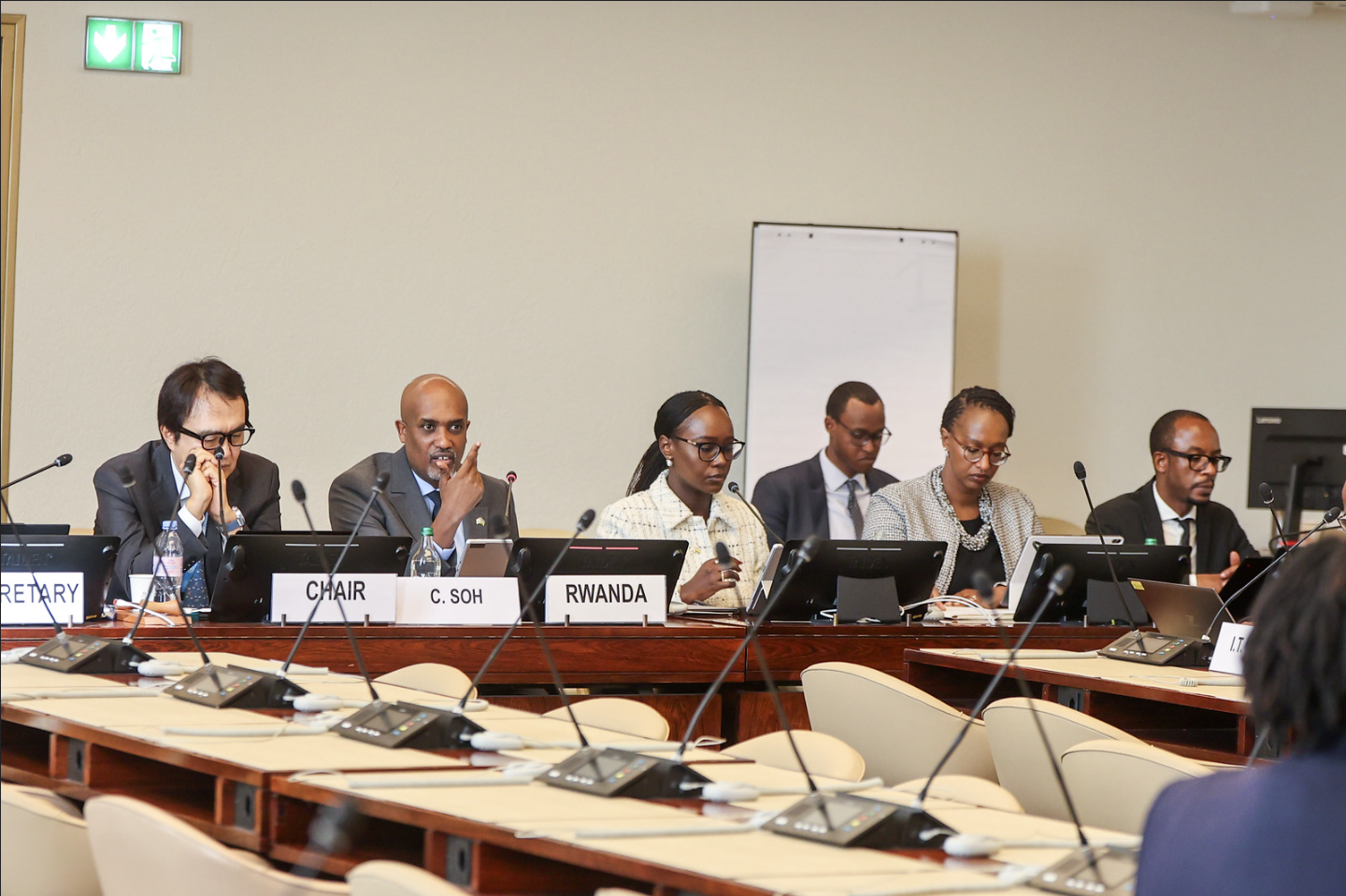
The UN Human Rights Committee has concluded today its review of Rwanda’s Fifth Periodic Report under the International Covenant on Civil and Political Rights (ICCPR), held in Geneva on 21–22 October 2026.
Rwanda’s delegation led by the Minister of Justice and Attorney General, Dr. Emmanuel Ugirashebuja, highlighted the country’s progress in protecting civil and political rights and engaging in constructive dialogue with the Committee on its continued efforts to advance human rights.
In his statement, the Minister underscored the importance of Rwanda’s history in shaping its commitment to human rights, stating:
“The experience of the 1994 Genocide against the Tutsi demonstrated the devastating consequences of discrimination, hate speech and institutional failure. Rwanda has therefore sought to build institutions that protect individual rights while preserving the unity and security necessary for every person to enjoy those rights.”
Rwanda continues to advance justice-sector reforms, including alternatives to imprisonment. The Criminal Justice Policy adopted in 2022 promotes diversion, rehabilitation and restorative justice, while recognizing imprisonment as a measure of last resort.
Between the 2022/23 and 2025/26 financial years, 36,227 cases were resolved through plea bargaining and 1,857 through victim–offender mediation, bringing the total to 38,084 cases by June 2026. From 2016 to 2026, 23,938 persons were granted parole, while 1,028 benefited from presidential pardons. Together with community service and other lawful measures, these approaches support reintegration and help manage occupancy in correctional facilities.
Rwanda reaffirmed that civil and political rights and economic, social and cultural rights are equally essential to human dignity, sustainable development and lasting peace. The country remains committed to strengthening the rule of law and working with national and international stakeholders to translate its human rights obligations into practical improvements in the enjoyment of rights by all.
More News

EASF CONVENES AIR OPERATIONS DOCUMENTS VALIDATION WORKSHOP IN KIGALI
The Eastern Africa Standby Force (EASF) has convened a five-day workshop in Kigali from 15th to 19th to validate the Combined Air Operations Manual,…

RDF HOSTS NIGERIAN NATIONAL DEFENCE COLLEGE DELEGATION
The Rwanda Defence Force hosted a delegation of 15 officers from the Nigerian National Defence College at RDF Headquarters in Kimihurura. The…

THE RDF ARMY CHIEF OF STAFF MEETS RWANDAN PEACEKEEPERS IN BANGUI CITY
The Rwanda Defense Force (RDF) Army Chief of Staff, Maj Gen Vincent NYAKARUNDI, accompanied by his delegation, today visited Rwandan peacekeepers…

EAC ARMED FORCES LAUNCH COMMAND POST EXERCISE USHIRIKIANO IMARA 2026 TO ENHANCE REGIONAL SECURITY COOPERATION
The 14th East African Community (EAC) Armed Forces Command Post Exercise (CPX), USHIRIKIANO IMARA 2026, has officially opened today, at the…

RDF, RNP and Fred Hollows Foundation Launch Eye Care and Cataract Surgery Campaign in Northern Province
The Rwanda Defence Force (RDF) and Rwanda National Police (RNP), in partnership with the Ministry of Health (MoH) and Fred Hollows Foundation Rwanda…

RWANDAN PEACEKEEPERS IN SOUTH SUDAN JOIN OTHER UN CONTINGENTS TO WELCOME NEW SRSG
Rwandan peacekeepers serving under the United Nations Mission in South Sudan (UNMISS), alongside troops from Bangladesh, China, Ethiopia, and Nepal,…

SENIOR RDF OFFICIALS ENGAGE WITH SENIOR COMMAND AND STAFF COURSE STUDENTS
As they concluded the RPA Liberation Study Tour, students from the RDF Senior Command and Staff College today engaged with senior military leaders at…

DEFENCE SPOKESPERSON JOINS EMPLOYEES FROM NATIONAL BANK OF RWANDA FOR THE 32nd COMMEMORATION OF THE 1994 GENOCIDE AGAINST THE TUTSI
Today, the Defence Spokesperson, Brig Gen Ronald RWIVANGA, joined employees from National Bank of Rwanda(BNR) in a commemoration event held at their…

DEPUTY DEFENCE SPOKESPERSON JOINS EMPLOYEES OF MARRIOTT KIGALI AND FOUR POINTS HOTELS TO REMEMBER GENOCIDE AGAINST THE TUTSI IN 1994
Today, at the Nyanza Genocide Memorial, the Deputy Defence Spokesperson, Lt Col Simon Kabera, joined employees from Kigali Marriott and Four Points by…

THE RDF CHIEF OF CIVIL MILITARY COOPERATION JOINS RESIDENTS OF MUHIMA IN THE 32 COMMEMORATION OF THE 1994 GENOCIDE AGAINST THE TUTSI
Today, the Chief of Civil-Military Cooperation in the Rwanda Defence Force (RDF), Colonel Désiré Migambi Mungamba, joined residents of Muhima Sector…