
Karongi: Unity and Resilience Forum calls for truth-telling to confront genocide ideology
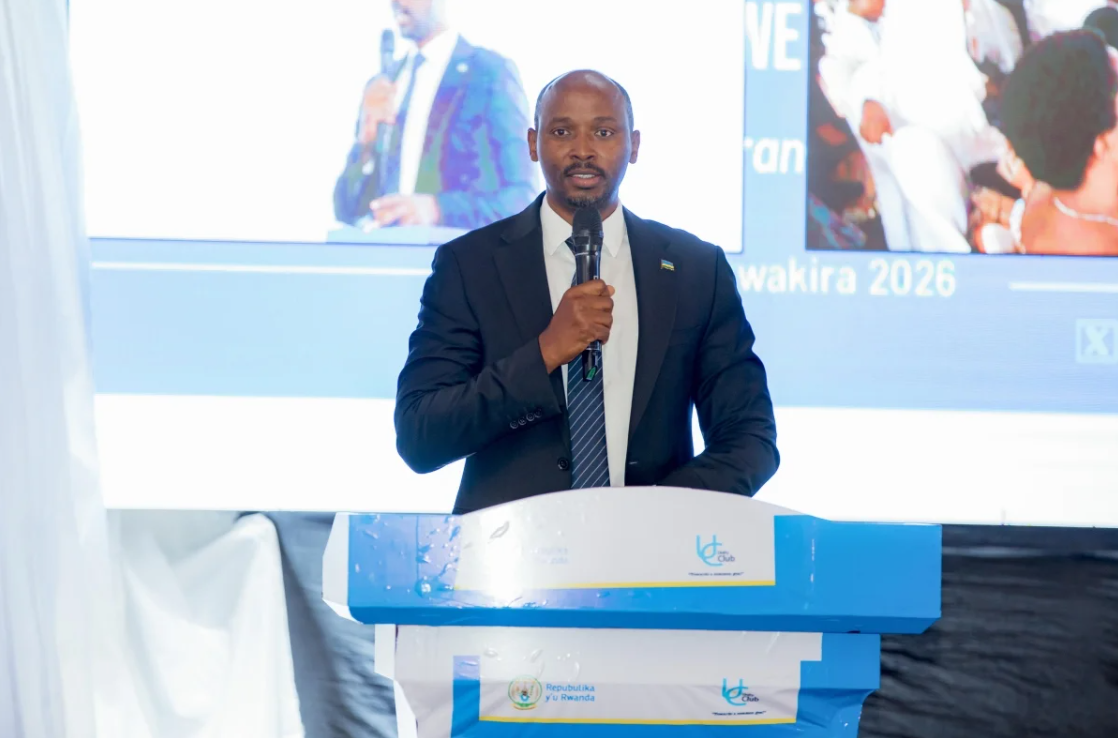
Minister of Health Sabin Nsanzimana addresses participants
Honest conversations about Rwanda’s history, including the experiences of survivors of the 1994 Genocide against the Tutsi, are essential to confronting genocide ideology, strengthening national unity and ensuring that younger generations understand the consequences of discrimination and division.
This was among the key messages at a Unity and Resilience Forum held in Karongi District on Tuesday, 13 October 2026, bringing together more than 600 participants from Karongi, Nyamasheke and Rusizi districts in Western Province.
Organised by Unity Club Intwararumuri in collaboration with the Ministry of National Unity and Civic Engagement (MINUBUMWE) and Western Province, the forum provided a platform for reflecting on Rwanda’s progress in rebuilding national unity and resilience, while identifying persistent challenges and the responsibilities of citizens in addressing them.
Minister of Health Dr Sabin Nsanzimana urged participants to confront difficult aspects of the country’s history rather than avoid them, emphasising the importance of communicating historical truth to younger generations.
“The remedy may be bitter, but it heals,” he said, adding that children should be told the truth, even when it is difficult to hear.
He acknowledged Rwanda’s progress in rebuilding the country but cautioned that genocide ideology remained a concern in parts of Western Province. He called on communities to engage in open and honest discussions to help young people understand the historical circumstances that led to the Genocide against the Tutsi.
Survivors’ experiences underscore the importance of historical truth
Personal testimonies highlighted how discrimination, hatred and persecution affected families and communities before and during the Genocide.
Bernard Kayumba, a former mayor of Karongi District, recounted experiencing discrimination from childhood, including the targeting of Tutsi pupils at school. During the Genocide, he lost family members and was forced to flee in search of safety.
He described how a woman whose husband had participated in the killing of his father helped conceal him and advised him to escape at night. He subsequently sought refuge in Bisesero, where Tutsi who had fled persecution continued to face attacks.
After surviving the Genocide, Kayumba resumed his education, studied law and eventually served as mayor of the district where he had experienced some of the country’s darkest moments.
He observed that confronting the past remained difficult, particularly when some people continued to withhold information about the whereabouts of victims’ remains or failed to participate in commemoration activities.
Minister of Public Service and Labour Judith Uwizeye also shared her experiences, recalling how her family had maintained close relationships with Tutsi neighbours before ethnic hatred spread through discriminatory practices at school and radio broadcasts that portrayed Tutsi as enemies.
During the Genocide, she said, her family sheltered people targeted by attackers despite threats against those who provided them with protection.
Uwizeye also highlighted the contribution of civic education camps, known as ingando, in helping young people from different backgrounds develop a shared understanding of their national identity.
Pastor Isaïe Ndayizeye, Presiding Bishop of the Pentecostal Church in Rwanda (ADEPR), reflected on growing up in a family with both Hutu and Tutsi parents. Despite encountering discriminatory teachings at school, he said he regarded the two groups as members of one family.
During the Genocide, his family feared for his Tutsi mother as relatives and neighbours were hunted. They eventually fled to the Democratic Republic of the Congo and returned to Rwanda after learning that the Rwandan Patriotic Army had reached their area.
Ndayizeye later continued his education and received a university scholarship, demonstrating the importance of rebuilding lives and expanding opportunities after the Genocide.
Unity and resilience require collective responsibility
Édouard Bamporiki, a member of Unity Club Intwararumuri, emphasised that confronting the past also required acknowledging the truth about the participation of some Rwandans in the Genocide.
He stressed that children should not be held responsible for crimes committed by their parents. Instead, they should be encouraged to reject wrongdoing, learn from history and contribute to the country's future.
“Rwanda is greater than all of us,” he said, underscoring the importance of shared national identity and collective responsibility in safeguarding unity.
Governor of Western Province Jean-Bosco Ntibitura outlined progress in restoring national unity and resilience, including support for survivors, the pursuit of justice through the Gacaca courts and efforts to combat genocide ideology.
Citing the 2025 National Unity Barometer published by MINUBUMWE, he said the province recorded a unity and reconciliation score of 94.9 per cent.
However, he identified persistent challenges, including genocide denial and minimisation, the spread of misinformation on social media, unresolved trauma among survivors, and the need to establish the whereabouts of victims’ remains and ensure their dignified burial.
These challenges, he noted, require continued cooperation among public institutions, communities and individual citizens.
Jean-Paul Niyoniringiye, a student at Rwanda Polytechnic (RP) Karongi College and a member of Unity Club, welcomed initiatives that enable young people to learn about the country's history from an early age.
He commended the Government for creating opportunities for young people to understand the past, preserve the achievements made in rebuilding the country and pass historical knowledge on to future generations.
Sustaining unity for future generations
The Unity and Resilience Forums are part of Rwanda’s efforts to strengthen national unity, resilience and civic responsibility, particularly during October, the month dedicated to unity and resilience.
Through dialogue and the sharing of experiences, the forums enable communities to assess progress since the Genocide against the Tutsi was stopped, reflect on the challenges that remain and identify practical ways to address them.
The discussions also reinforce the importance of preserving historical truth, rejecting genocide ideology and ensuring that every generation understands its role in protecting the country’s unity and resilience.
More News
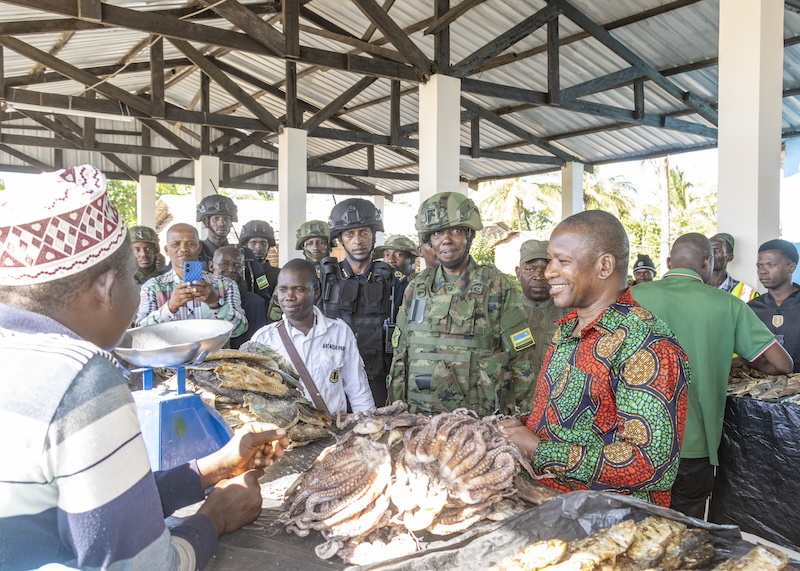
RWANDA SECURITY FORCE HANDOVER MARKET TO RESIDENTS OF MACOMIA DISTRICT
Cabo Delgado, 30 May 2025
Rwanda Security Force (RSF) officially handed over a newly constructed market facility to the local population of Macomia…

PROXIMITY COMMANDERS OF RWANDA AND TANZANIA STRENGTHEN CROSS BORDER SECURITY
Nyagatare, 29 May 2025
The Rwanda Defence Force (RDF) and the Tanzania People’s Defence Force (TPDF) are convening the 12th Proximity Commanders’…

RDF ARMY CHIEF OF STAFF BRIEFS RWANDA SECURITY FORCES AHEAD OF DEPLOYMENT TO CABO DELGADO
Kigali, 25 May 2025
The Rwanda Defence Force (RDF) Army Chief of Staff, Maj Gen Vincent Nyakarundi, accompanied by the Commissioner of Police Vincent…

RWANDA SECURITY FORCE CONDUCTS COMMUNITY WORK IN MACOMIA DISTRICT
Cabo Delgado, 24 May 2025
The Rwanda Security Force (RSF) deployed in Macomia District, Mozambique, along with residents of the Mucojo coastal…

RWANDAN PEACEKEEPERS INITIATE ANTI-MALNUTRITION CAMPAIGN IN MALAKAL COUNTY
Malakal, 23 May 2025
Rwandan female Peacekeepers ( Rwanbatt-2), in Malakal under the United Nations Mission in South Sudan (UNMISS), conducted a…

MOZAMBICAN TROOPS GRADUATE IN AN ADVANCED INFANTRY COURSE
Mozambique, 23 May 2025
Today, the President of Mozambique and CinC of Mozambique Armed Forces (FADM), His Excellency Daniel Chapo presided over the…

RWANDAN PEACEKEEPERS IN CENTRAL AFRICAN REPUBLIC DONATE EDUCATIONAL MATERIALS TO STUDENTS
Bria, 22 May 2025
Rwandan peacekeepers, comprising of Rwanda Battle Group VII and Rwanda Level 2+ Hospital, serving under the United Nations…

School authorities commend defence and security organs for constructing ECD Centres
Kigali, 20 May 2025
School authorities have expressed their appreciation to defence and security organs, as well as local authorities, for the…

LOCAL COMMUNITIES COMMEND SECURITY FORCES FOR PROVIDING CLEAN WATER
Kigali, 16 May 2025
Byenene Primary School in Kamonyi District and Mugogwe Primary School in Huye District have expressed their appreciation for the…

RWANDA DEFENCE FORCE CONCLUDES ANTI-GENDER BASED AVIOLENCE WORKSHOP FOR MILITARY SPOUSES
Gisagara, 14 May 2025
The Rwanda Defence Force (RDF) has successfully concluded Anti-Gender-Based Violence (GBV) workshop aimed at enhancing the…